
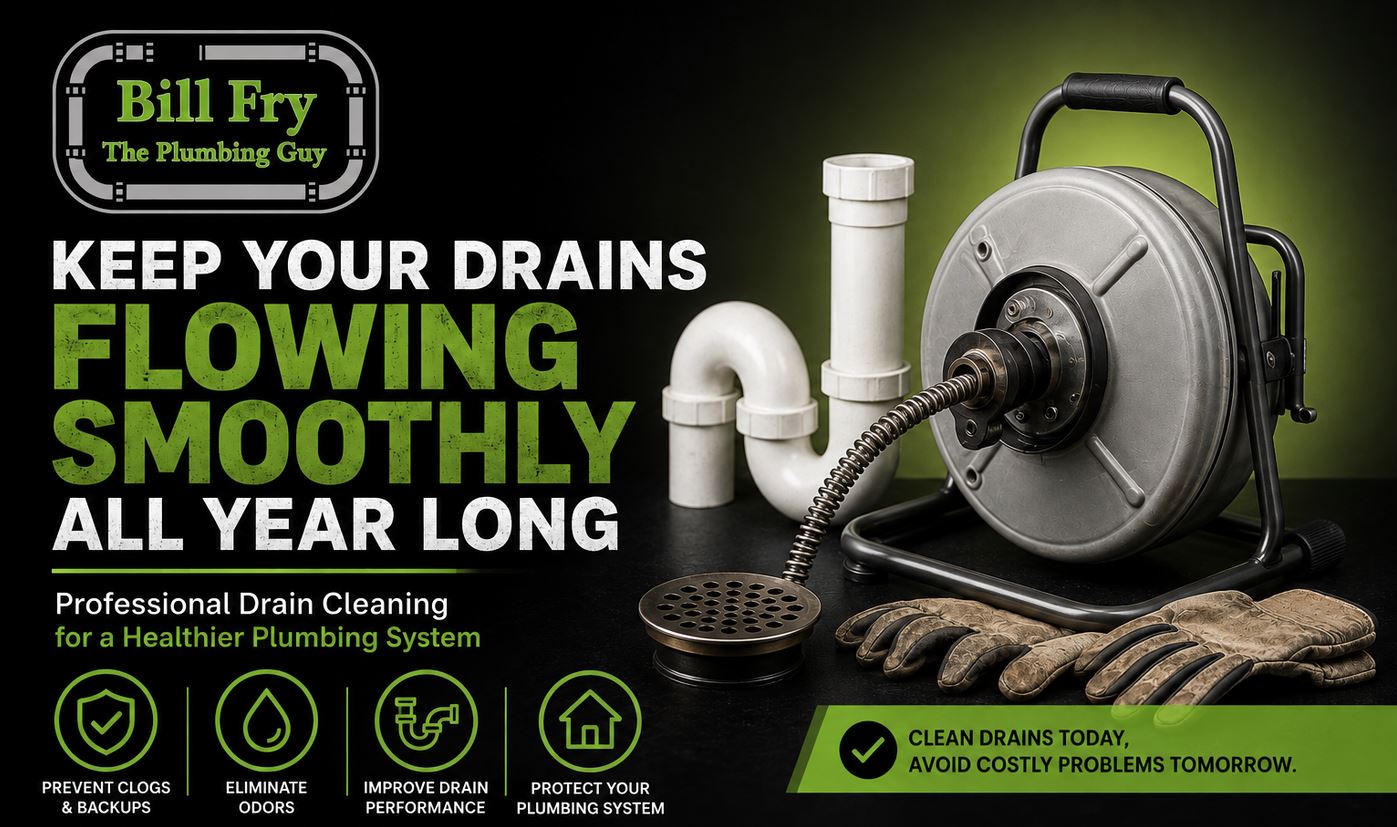
Drain problems rarely start with a dramatic backup. More often, you notice a sink that drains a little slower than usual, a shower that leaves water around your feet, or an occasional unpleasant smell coming from the pipes. These small warning signs can be easy to ignore, but they may indicate that buildup is already restricting the flow inside your plumbing.
At Bill Fry The Plumbing Guy, we know that regular drain maintenance can help Lee's Summit, MO, homeowners avoid many of the headaches associated with clogged or poorly flowing drains. Professional drain cleaning is not necessarily something every home needs on the exact same schedule, but understanding when it makes sense can help you stay ahead of plumbing problems.
Why Regular Drain Cleaning Matters
Your drains handle wastewater every day, carrying away everything from food residue and grease to hair, soap, and other debris. Over time, some of these materials can stick to the inside of your pipes and gradually reduce the available space for water to flow.
Regular drain cleaning can help remove accumulated buildup before it develops into a more significant obstruction. Keeping the system flowing properly may also reduce the chances of recurring clogs, unpleasant drain odors, and wastewater backups.
Routine maintenance is especially useful because a drain can still appear to work normally while buildup is forming inside the pipe. By addressing that buildup before the drain becomes completely blocked, you may be able to avoid a much more disruptive plumbing problem.
Factors That Affect Drain Cleaning Frequency
Several factors can influence how often your drains should be professionally cleaned.
A busy household naturally puts more demand on plumbing fixtures. More showers, laundry loads, meals, and bathroom use can mean more material entering the drainage system. Homes with older plumbing may also be more vulnerable to buildup and restricted flow.
Your habits matter, too. Grease and cooking residue can accumulate in kitchen drains, while hair and soap residue are common contributors to bathroom drain problems. Properties with mature landscaping may also have drainage concerns that require additional attention, particularly when underground lines are affected by roots.
The most useful approach is to base your maintenance schedule on the actual condition and history of your plumbing rather than relying on a one-size-fits-all rule.
Recommended Drain Cleaning Frequency for Different Drains
Different drains experience different types of use, so they may not all need attention at the same interval.
Kitchen drains often collect grease, food residue, and other debris, making them more likely to develop buildup over time. Bathroom drains commonly collect hair, soap residue, and personal-care products. Main sewer lines carry wastewater from throughout the home and can require professional attention when flow problems or recurring backups develop.
For many households, an annual professional inspection or cleaning is a reasonable starting point. Individual drains that repeatedly develop problems may need attention more frequently.
The important thing is to respond to patterns. If the same drain keeps slowing down or clogging after being cleared, the issue may be deeper in the line and could require professional cleaning or further inspection.
Signs Your Drains Need Professional Cleaning
Your plumbing usually gives you clues before a drain becomes completely blocked. Paying attention to those signs can help you address a problem earlier.
Watch for:
- Slow drainage in sinks, tubs, showers, or other fixtures
- Gurgling or bubbling sounds from your plumbing
- Persistent or unpleasant odors around drains
- Water backing up into a sink, tub, or shower
- Clogs that keep coming back after they have been cleared
- Multiple drains throughout the home becoming slow at the same time
One slow drain may be a localized issue, but problems affecting several fixtures can point to a larger obstruction in the drainage system. When those warning signs appear, professional drain cleaning can help determine what is happening and address the buildup more thoroughly.
How to Maintain Clear Drains Between Professional Services
Professional cleaning is only one part of good drain maintenance. The way your household uses its plumbing can also affect how quickly buildup develops.
In the kitchen, avoid pouring grease and cooking oils down the drain. Use sink strainers to catch food particles before they enter the pipes. In bathrooms, hair catchers can reduce the amount of hair that reaches the drain.
It is also helpful to pay attention to what goes down your toilets and sinks. Toilets should only be used for appropriate waste and toilet paper, while sinks should not be treated as disposal points for materials that can harden, expand, or collect inside the plumbing.
Small preventive habits can make a noticeable difference, but they should not be considered a substitute for professional cleaning when a drain is already showing signs of a developing problem.
When Recurring Clogs Require Professional Attention
A clog that disappears and then returns a few days or weeks later deserves attention. Repeatedly clearing the same drain may only be addressing the symptom while leaving the underlying buildup in place.
Recurring problems can happen when residue remains attached to the inside of a pipe, creating a rough surface where additional debris can collect. In some situations, a blockage may also be located farther down the line than the fixture itself.
When several drains begin acting up at once, the concern becomes even greater. A professional plumber can evaluate the drainage system and determine whether professional cleaning, inspection, or another plumbing service is appropriate.
What to Expect From Professional Drain Cleaning Services
Professional drain cleaning goes beyond simply trying to push a clog farther down the pipe. The goal is to improve drainage by removing the material responsible for the restriction and addressing the condition of the line.
Depending on the situation, a plumbing professional may use specialized equipment designed to clear buildup and restore proper flow. If recurring problems suggest a more complicated issue, additional diagnostic methods may be appropriate to identify the source.
The right service depends on what is actually happening inside the plumbing. A professional evaluation helps make sure the solution is based on the condition of the drain rather than guesswork.
How Regular Drain Cleaning Helps Protect Your Plumbing System
Keeping your drains maintained can do more than help prevent inconvenient clogs. Consistent drainage supports the normal operation of your plumbing system and can help reduce the chance of backups that disrupt your home.
Regular cleaning may also help homeowners identify developing drainage problems before they become more serious. When you combine professional maintenance with sensible everyday habits, you have a better opportunity to keep your plumbing dependable.
For Lee's Summit homeowners, the best schedule is one that reflects the way your household uses its plumbing and the history of your drainage system. Annual service can be a useful starting point for many homes, while properties with frequent clogs or heavier usage may benefit from more frequent attention.
Conclusion
You do not have to wait for a completely blocked drain to think about professional drain cleaning. Paying attention to slow drainage, recurring clogs, odors, and other warning signs can help you address drainage problems before they become major disruptions.
At Bill Fry The Plumbing Guy, we believe regular plumbing maintenance should be practical and proactive. Understanding your home's drain cleaning needs can help you protect your plumbing, maintain reliable drainage, and avoid unnecessary surprises.
For professional drain cleaning in Lee's Summit, MO, reach out to Bill Fry The Plumbing Guy and let our team help keep your drains flowing properly.