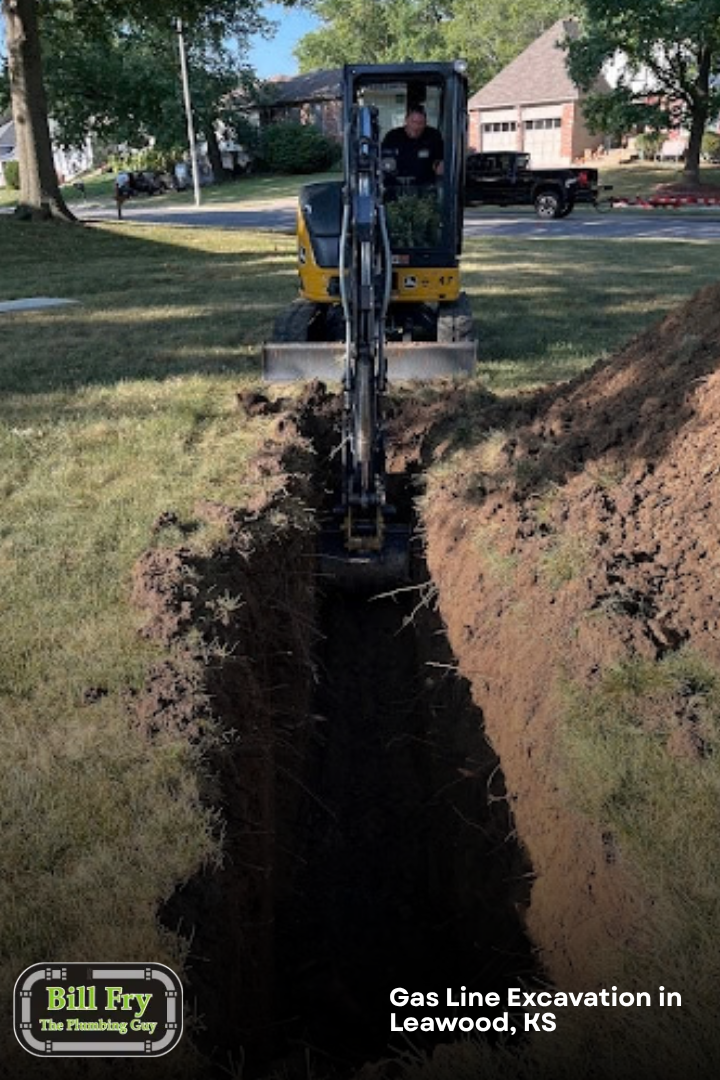
Gas Line Excavation in Leawood KS
A whiff of rotten eggs near your gas meter, a patch of lawn that won't stop dying no matter what you try, or a contractor who just called to say they've hit something they shouldn't have — these are the moments that turn an ordinary yard project into a genuine emergency. Gas lines don't leave much room for error, and when one needs to be repaired, replaced, or moved, the job requires more than a shovel and good intentions. That's the reality behind gas line excavation in Leawood, KS.
Gas line excavation is the process of locating and carefully exposing a buried natural gas line so it can be safely repaired, replaced, or rerouted, following strict tolerance zone and hand-digging protocols to prevent punctures or leaks. Because gas lines carry real safety risk, this work is handled differently than a typical water or sewer dig. Bill Fry the Plumbing Guy performs gas line excavation for homes and businesses throughout Leawood, KS and the greater Johnson County area, following proper locating and safe-digging procedures on every project.
Whether you've noticed warning signs on your property or a plumber has already recommended excavation, here's what you should know about how the process works, what keeps it safe, and what to do if something goes wrong along the way.
What Gas Line Excavation Actually Involves
At its core, gas line excavation means digging down to expose a buried gas line so a technician can access it. Gas service typically runs from the utility connection at the street to a meter on the property, then continues as buried or routed piping to appliances such as a furnace, water heater, range, or outdoor fire feature.
Because gas is pressurized and combustible, this isn't work that tolerates guesswork. Every step, from locating the line to opening the trench, follows procedures designed to keep the pipe intact until it's exposed and confirmed. It's one of several specialized services that fall under our broader residential plumbing work in Leawood, alongside water and sewer line projects.
Common Reasons Leawood Homeowners Need Gas Line Excavation
Property owners typically call for gas line excavation for one of these reasons:
- A leaking or corroded line that needs to be repaired or replaced before it worsens
- Relocating a line to make room for a remodel, room addition, or landscaping project
- Adding a new gas appliance, such as an outdoor grill, fire pit, or pool heater, that requires extending the existing line
- Investigating a suspected leak, whether that's a smell, a hissing sound, or an unexplained jump in gas usage
- Replacing aging steel piping that's corroded internally and is due for an upgrade to modern coated or plastic gas line
Regardless of the reason, the process always begins the same way: confirming precisely where the current line sits before anything is disturbed.
What Is the Tolerance Zone Around a Gas Line?
Understanding the tolerance zone is one of the most important parts of any safe excavation, and it's a concept every property owner should be familiar with before work starts near a marked line.
The tolerance zone is a buffer area surrounding a marked underground utility where digging must be done by hand or with non-mechanized methods rather than heavy equipment. Locate markings only show the approximate path of a buried line, not its exact position, so the tolerance zone accounts for that margin of uncertainty. Across the region, this buffer typically falls somewhere between 18 and 24 inches on either side of the marked line, with the exact figure set by state requirements and coordinated through Kansas 811, the organization responsible for utility locates statewide.
Working safely within the tolerance zone means:
- Sticking to hand tools or vacuum excavation until the line is visually confirmed
- Approaching the dig from the side of the marked line, not straight down on top of it
- Using blunt-edged tools, never pointed shovels or picks, near the suspected location
- Treating the marked depth as approximate, not exact, since grading and soil movement can shift how deep a line actually sits over the years
Skipping these precautions is how avoidable utility strikes happen. Respecting the tolerance zone is standard procedure on every excavation project we run.
How Do You Safely Expose a Gas Line Before Excavating?
Before any trenching begins, the existing line has to be located and exposed with care. Here's how that process typically unfolds:
- Contact Kansas 811 before digging. This is required by law for any excavation project and starts the process of notifying utility providers, including the gas company, to mark their lines.
- Wait for confirmed markings. Gas lines are marked with yellow paint or flags. No digging should start until all affected utilities have responded.
- Hand-dig within the tolerance zone. Once markings are set, work near the marked path is done manually or with vacuum excavation, not mechanized trenchers.
- Dig from the side, not from above. This reduces the risk of driving a tool directly into the pipe.
- Visually confirm the line once exposed, checking its actual depth, material, and condition before bringing in equipment for the rest of the excavation.
- Support the exposed pipe properly for the remainder of the project to prevent stress or accidental contact while surrounding work continues.
This staged, careful approach is what allows a crew to safely widen the dig with heavier equipment once the line's true location has been verified.
What Should You Do If You Smell Gas After Hitting a Line?
Even with proper locating, gas line strikes can still happen, particularly on older properties where line depth wasn't well documented. If you smell gas, hear hissing, or suspect a line has been damaged during digging:
- Stop digging immediately and move any equipment away from the area
- Clear the area of people and pets right away
- Avoid anything that could spark an ignition — no starting engines, using phones nearby, lighting anything, or flipping electrical switches
- Never attempt to cap, plug, or repair the line yourself, as improper handling can make the leak worse
- Call your gas utility and 911 from a safe distance so the line can be professionally shut off and repaired
- Stay away from the area until utility crews or emergency responders confirm it's safe to return
A damaged gas line is a genuine emergency. The fastest and safest response is to clear the area and get trained responders on site, not to investigate the problem yourself.
Can You Fix a Damaged Gas Line Yourself?
No. This is not a do-it-yourself repair, and in most areas, including Leawood, only licensed professionals are legally permitted to work on gas piping. There are good reasons for that restriction:
- A poor repair can create a slow leak that isn't obvious right away but remains a serious hazard
- Gas fittings require specific materials and sealing techniques that need to be done correctly to hold under pressure
- Permits and inspections are usually required for gas line work, and skipping them can create real problems later, particularly when selling the home
- Licensed plumbers use pressure testing and leak detection equipment to confirm a repair is actually sound before the line goes back into service
If you suspect an issue with a gas line, the safest move is to shut off gas to the area if you can do so safely, then call a licensed plumber. Attempting a fix on your own risks turning a repairable problem into a dangerous one.
What to Expect When You Call Us for Gas Line Excavation
Every gas line project we take on in Leawood follows the same safety-first sequence:
- Initial assessment of the suspected issue and any visible warning signs
- Utility locate request filed through Kansas 811 before any digging starts
- Written scope of work explaining the planned excavation and repair approach
- Careful line exposure using hand-digging and vacuum excavation within the tolerance zone
- Repair, replacement, or rerouting completed by licensed technicians
- Pressure testing to confirm the line is sealed and safe before use
- Backfill and site restoration, along with documentation for permits and future reference
Gas line work often intersects with other buried utilities on a property. If your project also touches your water line excavation or sewer excavation needs, our team plans the full scope of the dig together rather than treating each utility as a separate job. And if backups or slow drains show up alongside a gas line concern, our sewer cleaning team can rule out a separate issue while we're already on site.
A gas line issue isn't something to put off or handle with guesswork. Whether you've spotted warning signs on your property or you're planning a project that requires moving an existing line, this work calls for proper locating, careful excavation, and a licensed team that knows exactly what they're doing underground.
Bill Fry the Plumbing Guy provides licensed, insured gas line excavation throughout Leawood, KS and the surrounding Johnson County area, with upfront estimates, permit guidance, and documented work on every job. Call or contact us online to schedule an assessment and get it handled the right way.

Frequently Asked Questions
Warning signs include a sulfur-like smell near the ground, dead or discolored vegetation in an otherwise healthy lawn, hissing near the meter or line path, and gas bills that spike without explanation. Any of these warrant a call to your gas utility and a licensed plumber.
Most repair, replacement, and relocation projects involving gas lines require a permit. We handle permit guidance and filing as part of the process.
Depth varies by utility, soil conditions, and local requirements, and it can shift over time as grading and landscaping change. That variability is exactly why locating and hand-exposing the line is required before any mechanized digging.
Not usually. Once the line is located and exposed, excavation is generally limited to the section that needs work, particularly for targeted repairs.
It carries real risk if handled carelessly, which is why locating, tolerance zone digging, and hand-exposure protocols exist. Licensed plumbers are trained specifically to manage that risk and keep the work safe.