
Water Line Excavation in Leawood, KS: What Every Homeowner Should Know Before You Dig
Water line excavation is the process of digging down to your buried water service line — usually 30 to 36 inches below grade in the Leawood area — to repair, replace, or reroute it. Depending on the extent of the damage, this can mean a targeted spot repair or a full trench dig from the street to your home. At Bill Fry the Plumbing Guy, we handle this work for homeowners and businesses throughout Leawood, KS and Johnson County, using camera inspection and modern excavation techniques to get it right the first time.
If you're staring at a wet spot in your yard or a plumber has already told you that your water line needs to come out, this guide walks through what excavation actually involves, how deep your line should be, how professionals locate it before digging, and the warning signs that tell you it's time to call.
What Is Water Line Excavation?
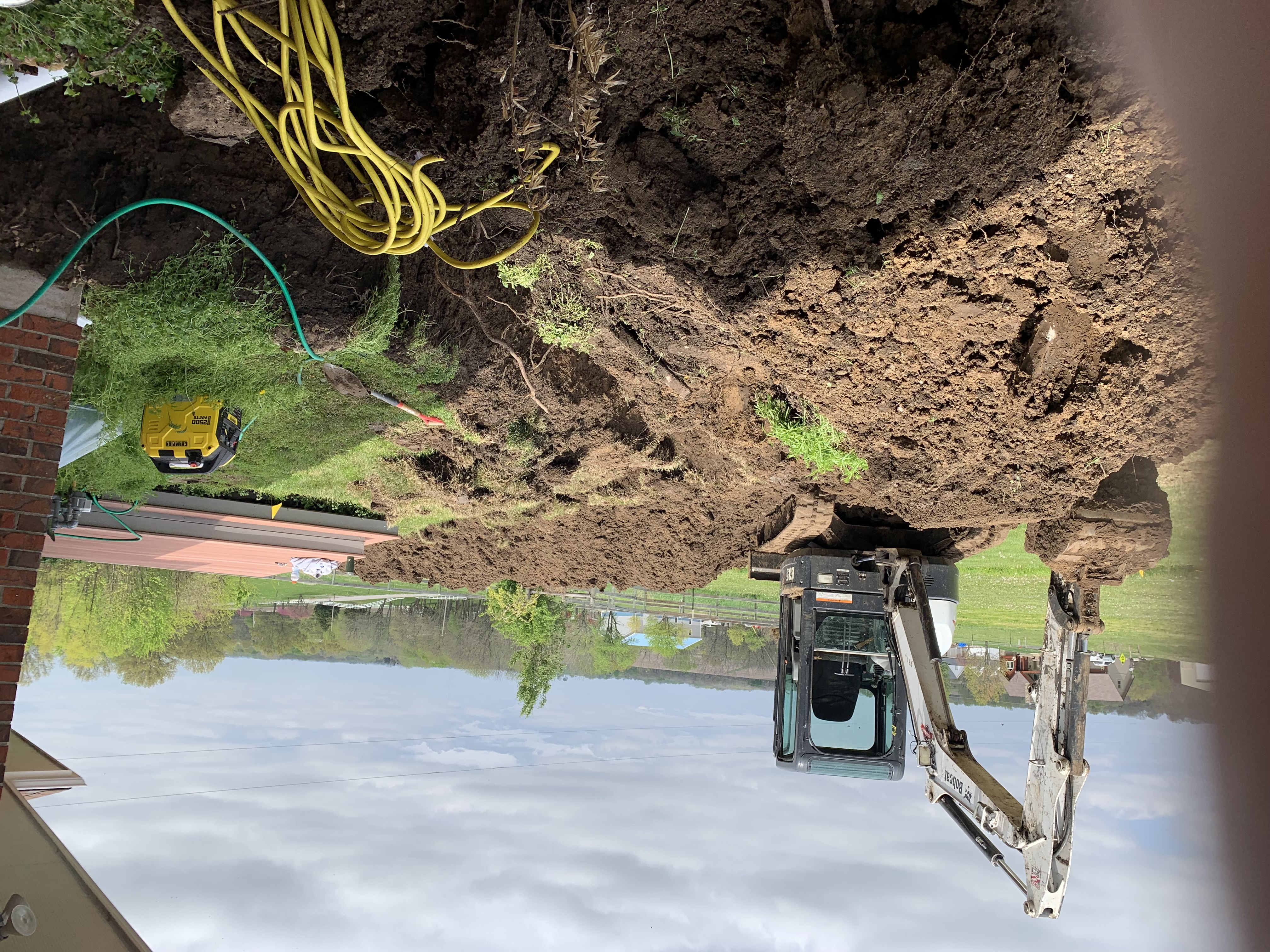
Water line excavation refers to digging up the ground above a buried water service line — the pipe that runs from the municipal water main in the street to your home's main shutoff valve — so a plumber can access, repair, or replace it. Unlike work you can do inside your walls or crawlspace, this pipe is buried underground, often running beneath landscaping, driveways, or even portions of sidewalk.
Excavation becomes necessary when a water line has corroded, cracked, shifted due to soil movement, or simply reached the end of its service life. Older Leawood homes, particularly those with galvanized steel or aging copper service lines, are more prone to this kind of failure than homes with newer PEX or copper installations.
Water Line Excavation vs. Trenchless Repair
Homeowners often ask whether their water line can be fixed without digging at all. In some cases, trenchless methods like pipe bursting or pipe lining are an option. However, traditional excavation is still the most reliable approach when:
- The damage is isolated to a specific section of pipe
- The existing line has multiple failure points along its length
- Soil conditions or obstructions make trenchless methods impractical
- The line needs to be relocated, not just repaired
Our team evaluates your specific situation — line material, age, depth, and the location and extent of the damage — before recommending an excavation method. That evaluation is part of every water line service call in Leawood.
How Deep Should a Water Line Be Buried?
This is one of the most common questions we hear from homeowners, and it's an important one to understand before any excavation begins.
Water lines must be buried below the local frost line to prevent freezing during winter. In the Leawood, KS area, local plumbing code typically requires water service piping to be installed at a minimum depth that accounts for frost penetration in this region, with most residential water lines sitting in the range of 30 to 36 inches below grade. The exact depth required for your property depends on:
- Local frost line depth, which varies by jurisdiction and is set by the city or county
- Soil composition, since denser or wetter soils can hold cold longer
- Traffic and surface loading, if the line runs under a driveway or area subject to heavy weight
- Existing utility conflicts, which may require adjusting depth to avoid gas, sewer, or electrical lines
Burying a line too shallow risks freezing and bursting during cold snaps; burying it deeper than necessary adds unnecessary excavation cost and labor. Getting the depth right the first time is one of the reasons this work should be handled by a licensed plumber familiar with Leawood's code requirements, not a general contractor unfamiliar with local plumbing standards.
How Do You Locate a Water Line Before Digging?
Before any shovel or excavator touches your yard, the exact path of the existing water line has to be identified. Digging blind risks striking the very line you're trying to fix, along with nearby gas, electric, or sewer lines. Professional plumbers use several methods to pinpoint the line's location:
- Utility locating services — Before any excavation, we coordinate with local utility locating services (such as Kansas 811) to mark public utility lines in the area, which is required by law before digging.
- Electronic pipe locators — These devices send a signal through metal pipe or an inserted tracing wire, allowing technicians to trace the exact path of the line from the surface.
- Camera inspection — For lines that are cracked or blocked, a camera can be fed through accessible points to visually confirm the pipe's route, material, and condition.
- Property records and as-built drawings — When available, older permits or installation records can confirm approximate depth and routing, though field verification is still required.
- Ground-penetrating radar — In more complex cases, especially where multiple utilities run close together, radar equipment can map underground obstructions before digging begins.
Combining these methods minimizes the size of the excavation site and reduces the risk of damaging other buried utilities — which keeps the job faster, cleaner, and less disruptive to your landscaping.
What Are the Signs of a Broken Underground Water Line?
A broken water line rarely announces itself with an obvious burst. Most leaks develop gradually, and the signs can be easy to dismiss until the damage — and the water bill — adds up. Watch for:
- Unexplained increases in your water bill with no corresponding change in usage
- Wet or soggy areas in the yard, especially patches that stay damp even during dry weather
- Unusually lush or green grass in one section of the lawn compared to the rest
- Low water pressure throughout the house, particularly if it developed suddenly
- The sound of running water when no fixtures are in use, sometimes audible near the water meter
- Cracks or shifting in a driveway, walkway, or foundation near where the line runs
- Discolored or muddy water coming from your taps
- A constantly running water meter even when all fixtures inside are off
If you notice more than one of these signs, it's worth having a plumber inspect the line before the leak worsens or causes secondary damage to your foundation or landscaping. Some of these symptoms overlap with issues we cover under our residential plumbing services in Leawood, so a full diagnostic visit is the fastest way to confirm the actual source.
When Should a Water Line Be Fully Replaced Instead of Patched?
Not every water line problem calls for a full replacement. A single, isolated leak in an otherwise sound line can often be repaired with a spot excavation and pipe section replacement. But a full replacement becomes the more practical — and more cost-effective — option when:
- The line has failed more than once. Repeated leaks along the same pipe usually indicate the material has degraded throughout its length, not just at one point.
- The pipe is made of galvanized steel or other outdated material. These materials corrode from the inside out, and once they start failing, additional leaks are typically only a matter of time.
- The line is significantly undersized for current household water demand, causing chronic pressure issues unrelated to any single leak.
- Multiple repairs would cost more, cumulatively, than one full replacement, especially when each repair requires reopening the yard.
- The pipe's age exceeds its expected service life. Older copper and galvanized lines installed decades ago are approaching or past the point where full replacement is the more reliable long-term investment.
A camera inspection and a conversation about the pipe's material, age, and history is the best way to determine which path makes sense for your property. We walk every Leawood homeowner through this assessment before any digging starts, so the decision is based on the actual condition of the line rather than guesswork.
What to Expect During a Water Line Excavation Project
Every excavation project at Bill Fry the Plumbing Guy follows a consistent process designed to minimize disruption to your property:
- Diagnosis and inspection — We confirm the location, depth, and condition of the existing line using camera inspection and locating equipment.
- Utility marking — Public utilities are marked before any digging begins, in accordance with local requirements.
- Written scope and estimate — You'll receive a clear explanation of the recommended repair or replacement approach before work starts.
- Excavation — Trenching is done to expose the affected section of pipe, sized appropriately to limit yard disruption.
- Repair or replacement — Damaged sections are cut out and replaced, or the full line is rerouted, depending on the scope agreed upon.
- Backfill and compaction — The trench is properly backfilled and compacted to restore the site and prevent future settling.
- Final testing — Water pressure and line integrity are tested before the job is closed out, with documentation provided for your records.
This same disciplined process applies whether the job is a straightforward spot repair or part of a larger project that also touches your sewer excavation or gas line excavation needs, since these underground utilities often run in close proximity to one another.
Underground water line issues rarely improve on their own, and the longer a leak runs, the more it can affect your water bill, your landscaping, and even your home's foundation. If you're seeing any of the warning signs above, or a plumber has already flagged a possible line issue, don't wait for it to get worse.
Bill Fry the Plumbing Guy proudly serves Leawood, KS and the surrounding Johnson County area with licensed, insured water line excavation services — backed by upfront estimates, permit guidance, and documented work on every job. Call us today at (913) 800-2455 or contact us online to schedule an inspection and find out exactly what's happening beneath your yard.
-Photoroom.webp)
Frequently Asked Questions
Timeline depends on the length of the trench, depth of the line, and whether obstructions like landscaping, concrete, or other utilities are in the way. A spot repair may be completed in a single visit, while a full line replacement can take longer.
Some disruption to the excavation area is unavoidable, but experienced crews limit trench width and restore the site with proper backfill and compaction once the work is complete.
Many water line projects in Leawood require a permit, particularly for full replacements or rerouted lines. Our team handles permit guidance and filing where required.
Yes, in most cases. Water service may be temporarily shut off during the active repair or replacement, but this is typically limited to the working hours needed to complete the connection.
A water line brings fresh water into your home from the municipal supply, while a sewer line carries wastewater away. Both are buried underground and can require excavation, but they're diagnosed and repaired differently — our team evaluates each separately during inspection.